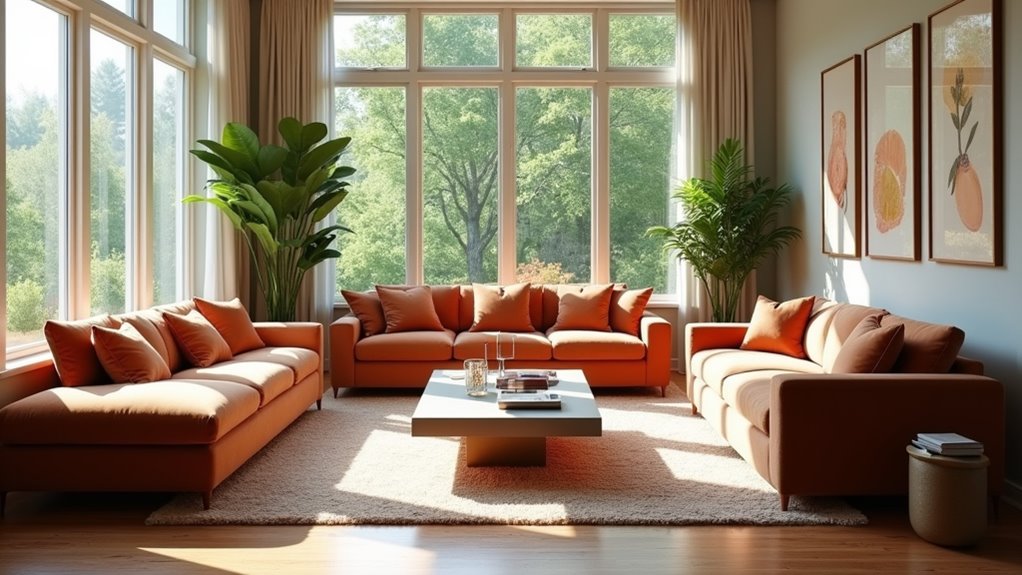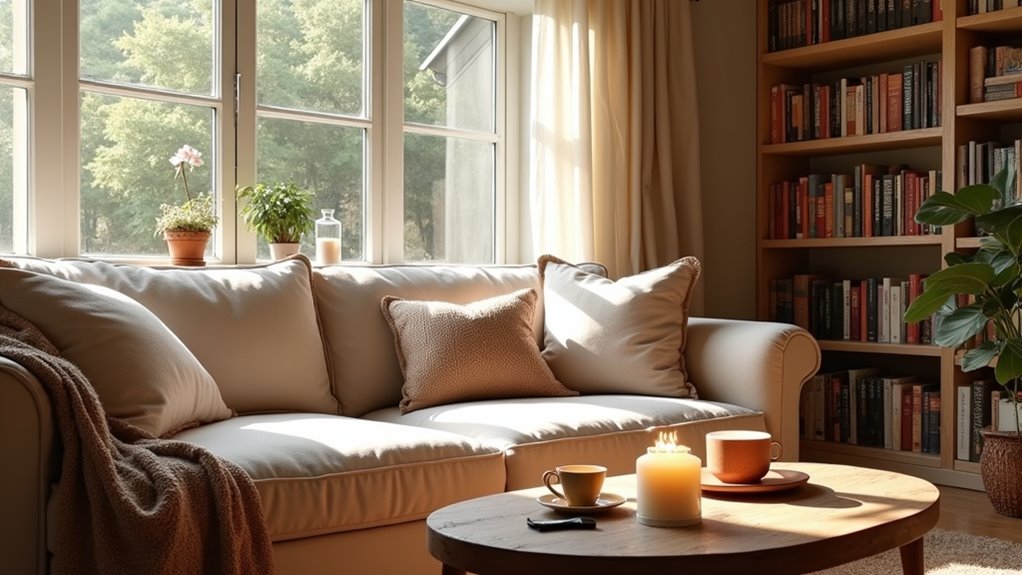
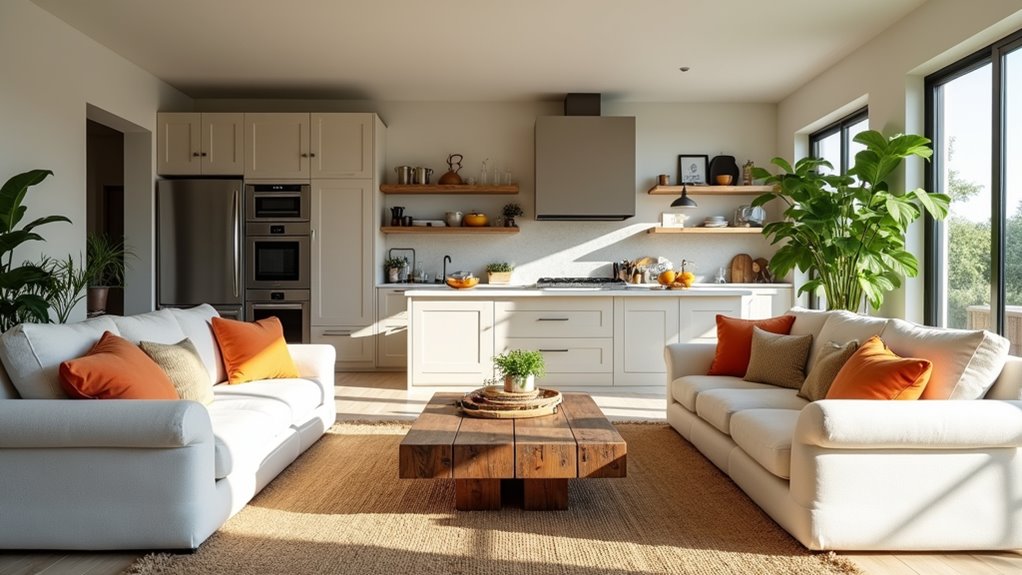
Creating a seamless flow between your living room and kitchen is essential for a cohesive home. You can achieve this harmony with a blend of clever decor choices, such as a matching color palette or multi-functional furniture. Imagine the inviting warmth of consistent textures or the striking impact of art that bridges both spaces. But what are the best strategies to unite these areas? Let’s explore innovative ideas that can transform your home into a stylish sanctuary.
Common Challenges in Designing Transitional Spaces
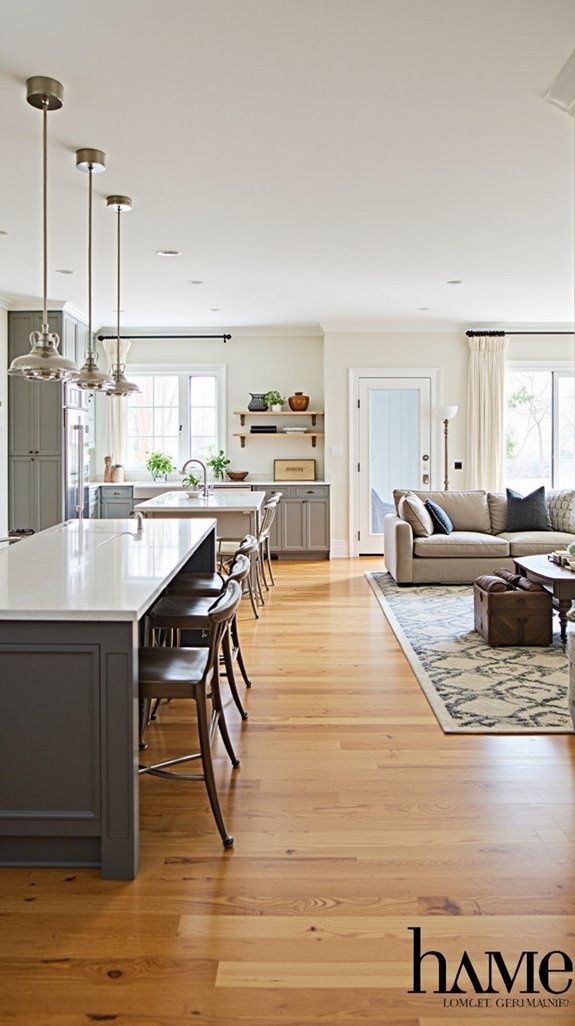
When you begin the journey of designing changing spaces, it’s easy to feel overwhelmed by the multitude of choices available.
One common challenge you’ll face while developing home decor ideas for your living room and kitchen is ensuring a seamless flow between these areas. Balancing different styles and managing varying functionality can trip you up, making it hard to create harmony.
You might struggle to select furniture or accessories that complement, not clash. Additionally, practical concerns like lighting and layout can complicate your vision.
Embrace these challenges; they’ll push your creativity and result in inviting, cohesive spaces you’ll love.
Use a Cohesive Color Palette Across Spaces
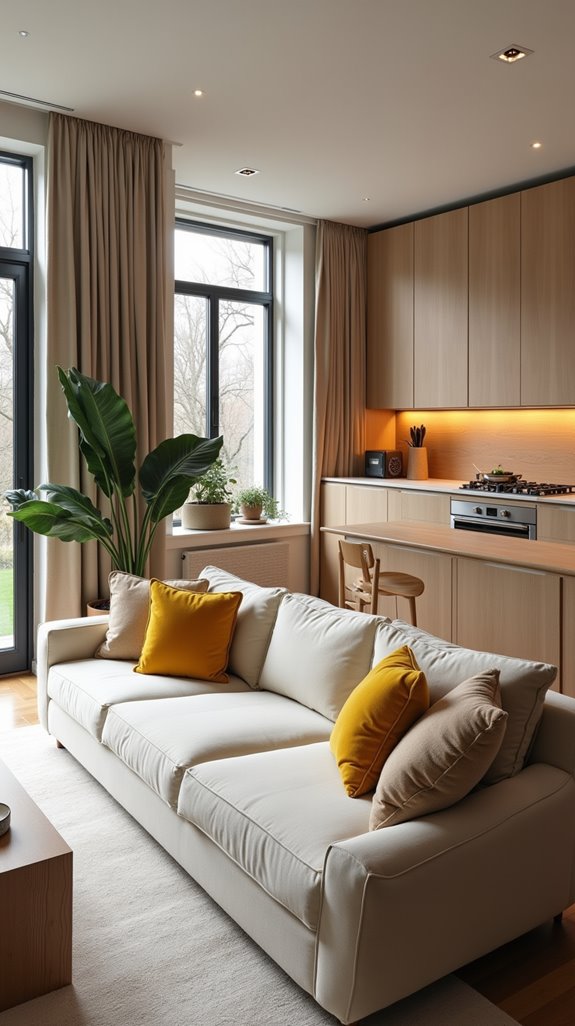
Using a cohesive color palette throughout your living spaces not only enhances aesthetics but can also create a sense of unity that feels instantly inviting.
Consider these tips to maintain that harmonious flow:
- Select a Primary Color: Choose a dominant hue for your living room, making it the foundation for your palette.
- Add Complementary Shades: Incorporate one or two colors that harmonize with your primary, adding depth and interest without overwhelming the space.
- Use Neutrals Wisely: Balance brighter colors with neutrals, ensuring your decor remains crisp and inviting while promoting a seamless progression between areas.
Embrace this approach for a truly engaging atmosphere!
Create a Focal Point in Both Rooms
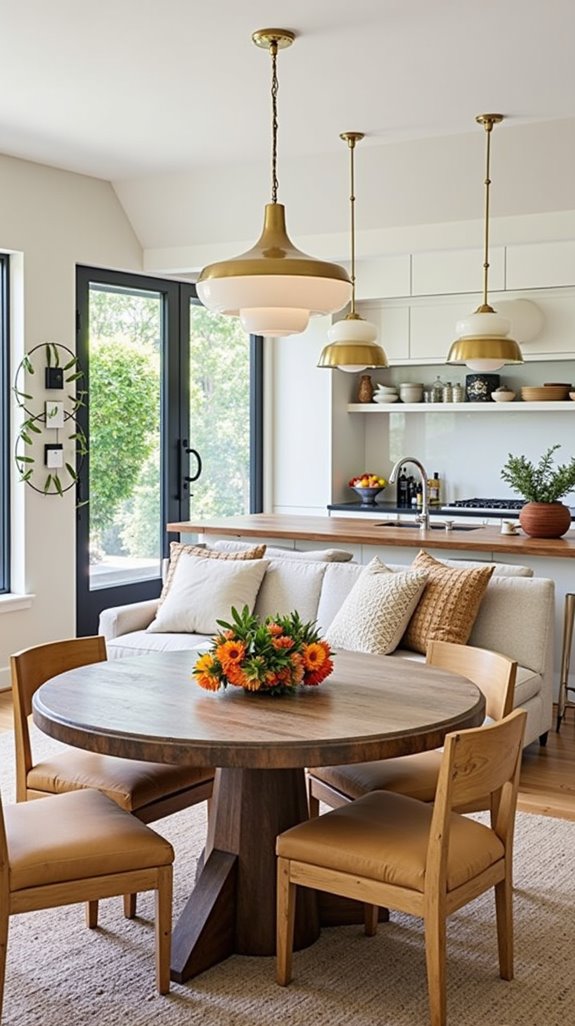
A well-defined focal point can transform your rooms from ordinary to extraordinary. In your living room, consider a striking piece of art or a beautifully crafted fireplace as the centerpiece that draws attention.
In the kitchen, showcase an elegant island or a sophisticated backsplash that stands out. These elements not only command focus but also create a sense of harmony between spaces.
When designing, ascertain your focal points align with your cohesive color palette, enhancing the overall flow. By thoughtfully selecting and positioning these features, you invite conversation and admiration, making your living and kitchen spaces inviting and engaging.
Choose Space-Saving Multi-Functional Furniture for Small Areas
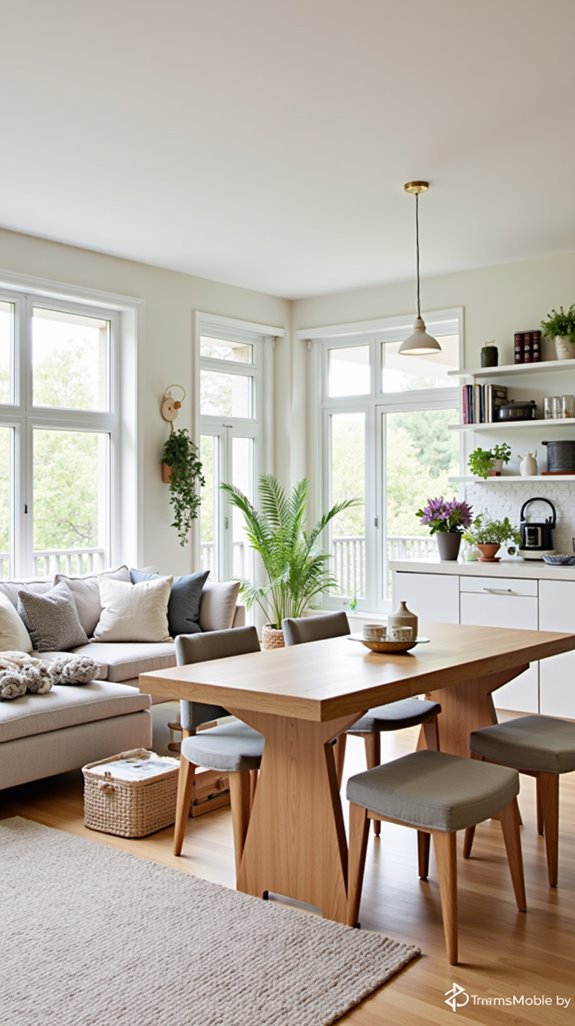
Even though small spaces can present unique design challenges, choosing space-saving multi-functional furniture can revolutionize how you utilize your living areas.
By selecting pieces that serve multiple purposes, you maximize your space creatively. Here are three ideas to take into account:
- Sofa Beds: They offer comfortable seating by day and transform into cozy beds at night.
- Storage Ottomans: These stylish pieces provide seating and hidden storage for blankets or magazines.
- Nesting Tables: Perfect for small areas, they can be stacked together for a sleek look or spread out when needed.
With such options, your small space can truly shine!
Layer Textures for Visual Interest
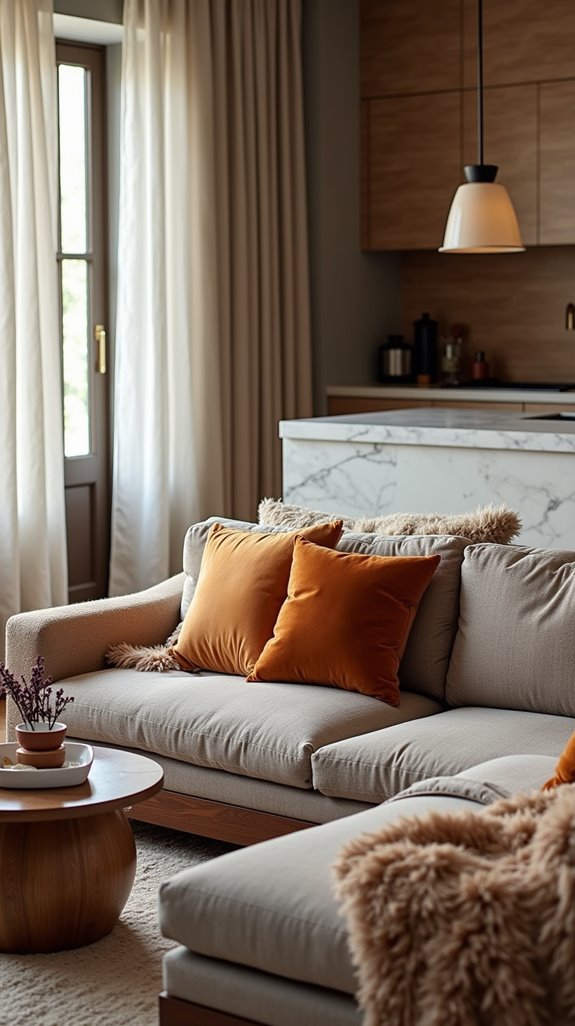
Textures are the secret ingredient that can transform a flat room into one bursting with personality and depth.
Start by mixing materials; think woven baskets alongside smooth ceramic vases. Layering a plush throw over a sleek leather sofa can create warmth, while combining rich fabrics, like velvet and linen, invites tactile engagement.
Don’t shy away from patterns; a striped pillow can contrast beautifully with a floral rug. Incorporating natural elements, like wood accents or stone features, adds dimension.
Choose Coordinating Lighting Fixtures
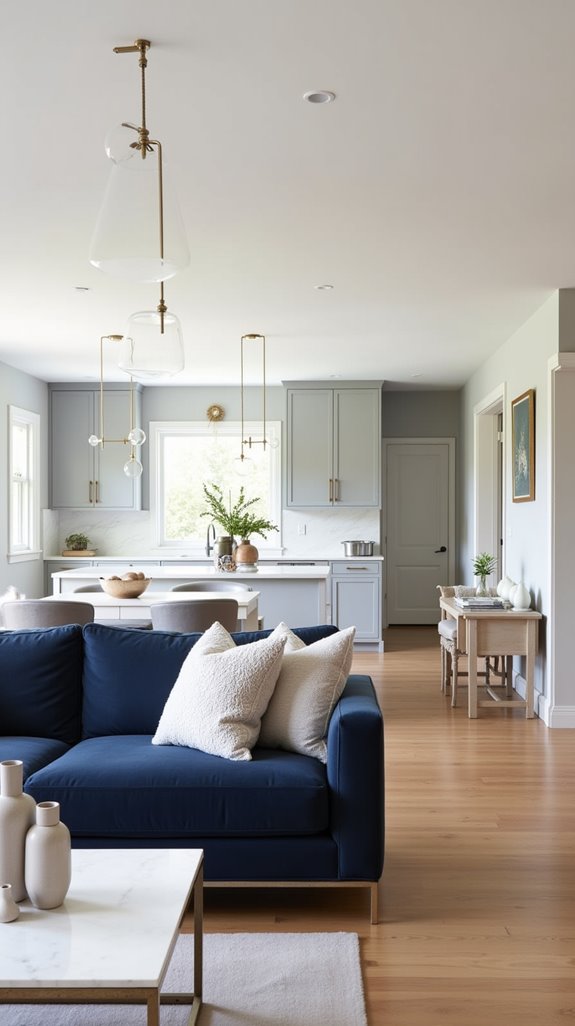
Choosing coordinating lighting fixtures can truly elevate the overall aesthetic of your space, transforming it from ordinary to extraordinary.
To achieve that harmonious flow between your living room and kitchen, consider these essential tips:
- Color Palette: Select fixtures that share complementary colors to maintain a cohesive look.
- Style Consistency: Opt for lighting with a common design theme, whether it’s modern, rustic, or industrial.
- Size Balance: Choose fixtures that are proportionate to the space; oversized options can overwhelm, while tiny ones may get lost.
With the right lighting, you’ll create an inviting atmosphere that enchants both you and your guests.
Hang Art for Transitional Space Connections
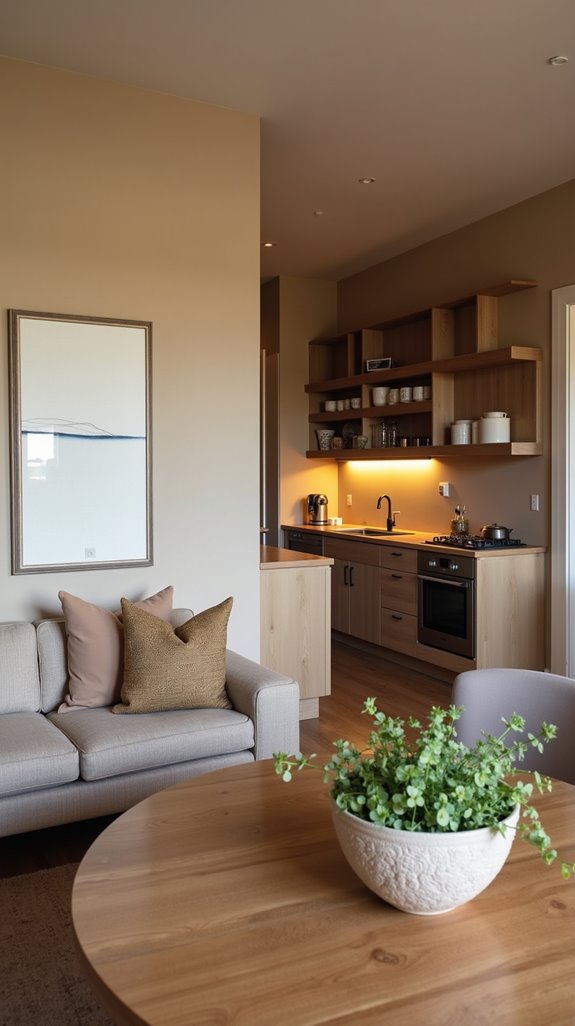
Once you’ve selected lighting fixtures that harmonize with your space, it’s time to make your walls come alive with art.
Choose pieces that not only reflect your personality but also create visual connections between the living room and kitchen. Hang oversized prints or a collage of smaller artworks, positioning them at eye level to foster engagement.
Consider color palettes that resonate with both areas, enhancing flow. Don’t forget frames—coordinated frames can bridge styles seamlessly.
Mixing textures and materials can add depth and interest. Transform your connecting space into a cohesive sanctuary, where art connects and invites conversation, making every glance delightful.
Define Transitional Spaces With Area Rugs
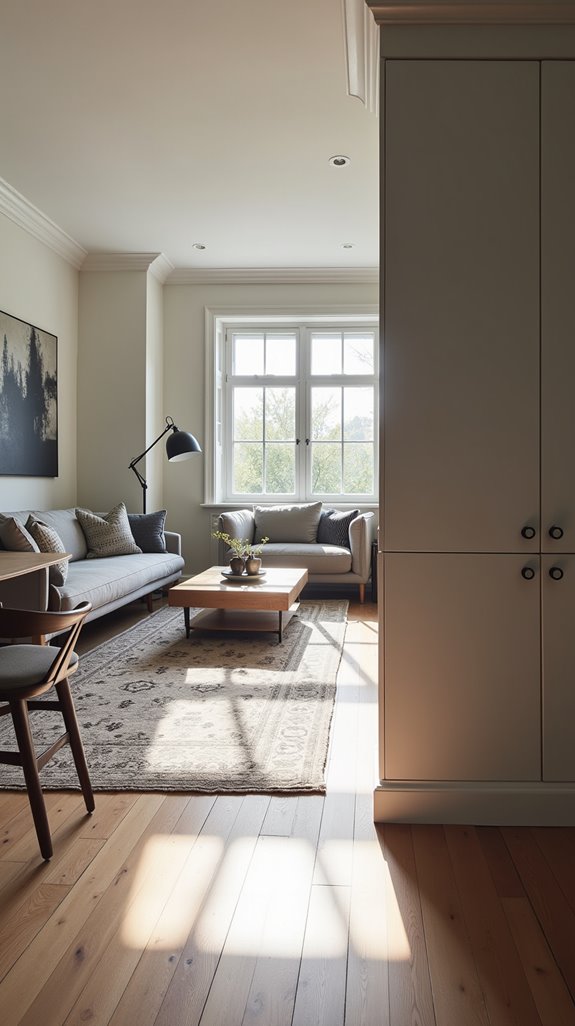
Area rugs can truly be a game changer in defining crossover spaces between rooms, seamlessly blending different areas of your home.
When you select the perfect area rug, consider these key elements:
- Size Matters: Verify your rug fits comfortably within both spaces, creating an inviting flow.
- Color Palette: Choose hues that reflect or complement your existing decor, enhancing continuity.
- Texture Balance: Mix different textures to add depth, making your design visually intriguing.
Incorporating area rugs not only defines your transitional spaces but also adds warmth and style that invites anyone into your beautifully curated home.
Best Plants for Transitional Spaces
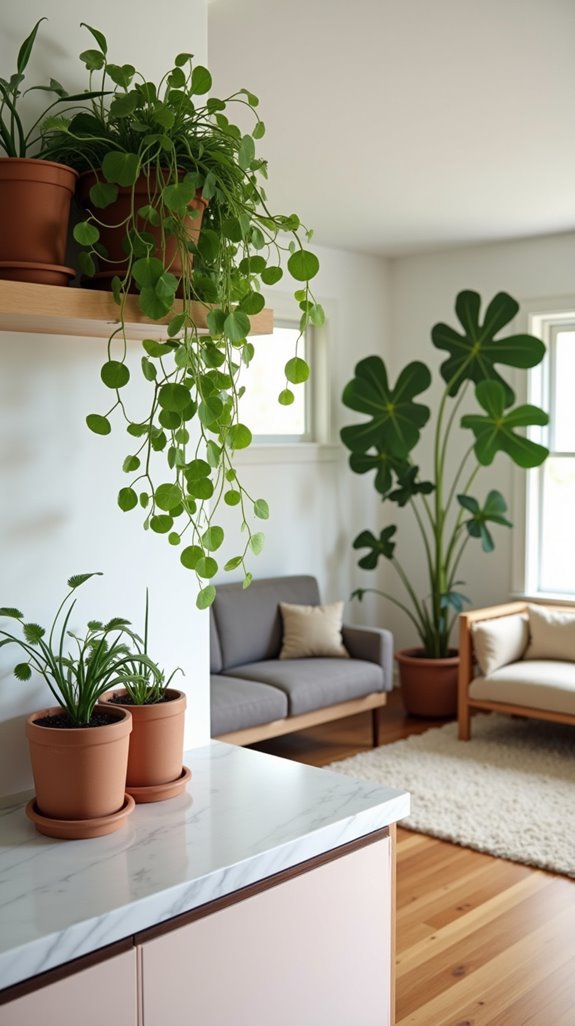
Transform your shifting spaces with the lush beauty of plants, as they can breathe life into any room and draw attention to the pathways connecting different areas of your home.
For transitioning areas, consider low-maintenance options like pothos or snake plants, which thrive in varied light and add striking greenery.
Place a tall fiddle leaf fig for a dramatic focal point, or hang trailing string of hearts from shelves, creating visual depth.
Succulents in stylish pots bring a modern touch, while peace lilies soften corners with their elegant blooms.
Select Coordinating Window Treatments
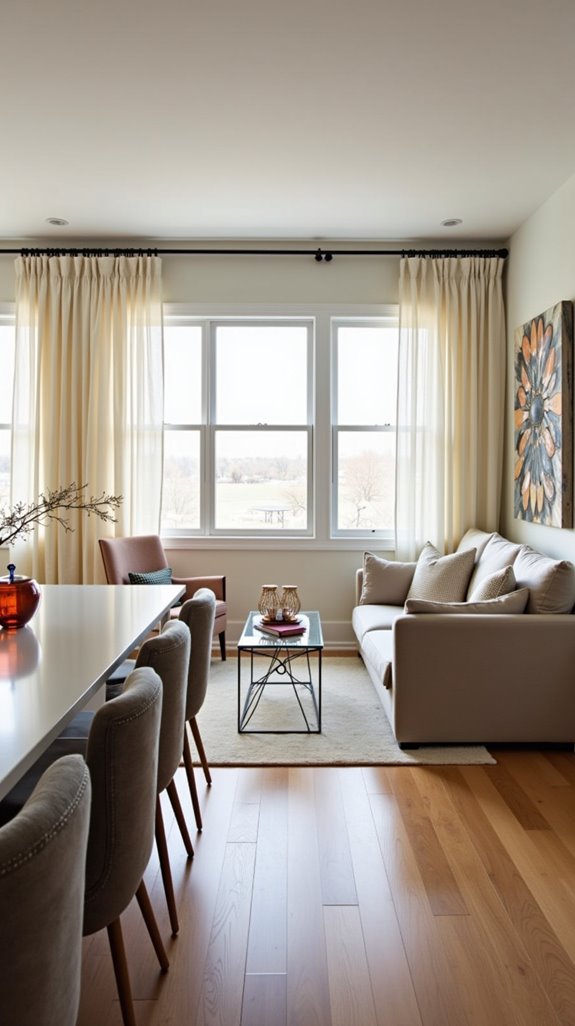
Enhancing your home’s aesthetic goes beyond just choosing the right plants; it also involves selecting the perfect window treatments that unify your space.
Coordinating your window treatments creates flow and enhances your design. Here are three tips to help you choose:
- Match Materials: Use similar fabrics for curtains and cushions to create harmony.
- Consistent Colors: Select colors that echo each other between rooms for a seamless look.
- Varied Lengths: Experiment with different lengths, like floor-to-ceiling drapes and shorter shades, to add visual interest while maintaining cohesion.
With so many styles, you won’t just cover windows; you’ll elevate your whole home!
Add Greenery for a Natural Transition
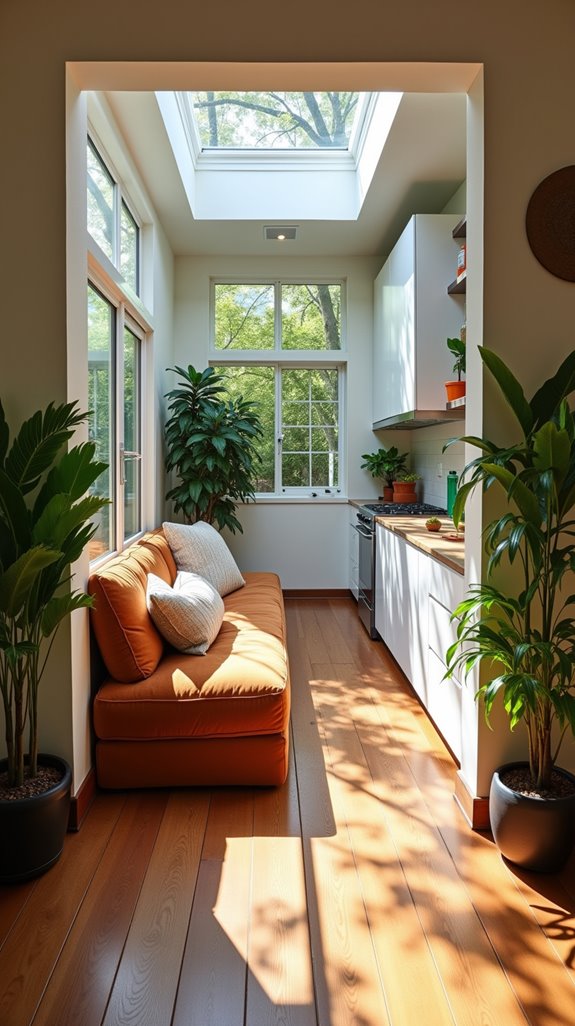
While you mightn’t think of plants as essential decor, incorporating greenery into your living spaces can create a stunning, natural transformation that breathes life into your home.
Plants can unite your living room and kitchen, bridging the gap between these areas. Consider placing a lush potted plant on your countertop or hanging trailing vines near a window.
The vibrant greens contrast beautifully with wooden or neutral-toned furnishings, infusing freshness and warmth. Even small succulents can add character, subtly enhancing your style.
Ultimately, adding greenery isn’t just decor; it’s a delightful way to elevate your home’s atmosphere and well-being.
Integrate Decorative Backsplashes
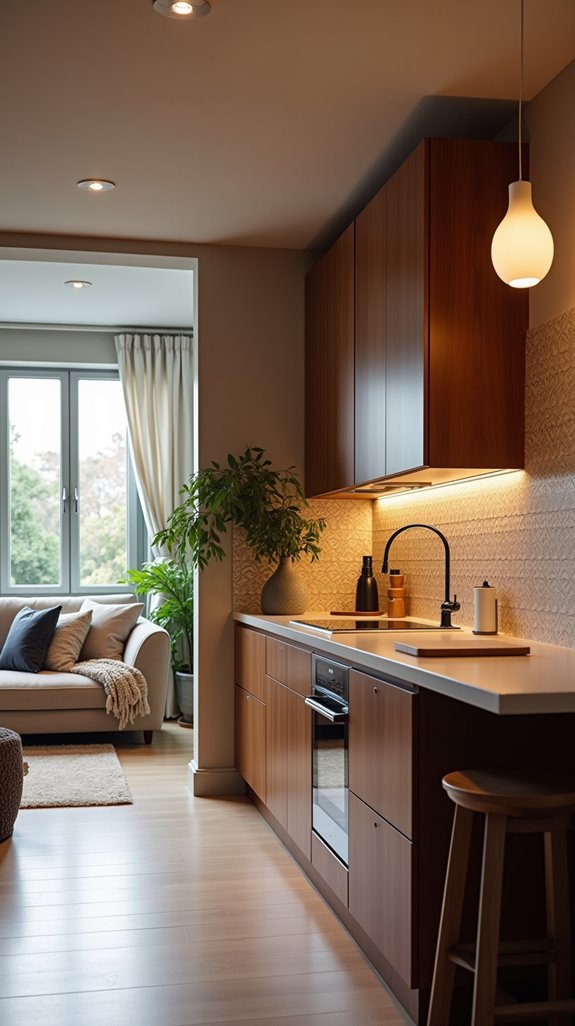
If you want to redefine your kitchen or bathroom without a complete overhaul, integrating decorative backsplashes can work wonders. They not only enhance your space but also express your style.
Here are three popular ideas to get you started:
- Tile Patterns: Utilize colorful or uniquely shaped tiles to create a striking focal point.
- Natural Stone: Embrace the organic beauty of natural stone for a timeless look.
- Glass Panels: Opt for sleek glass backsplashes that reflect light and add a modern touch.
Incorporating these elements can elevate your home’s aesthetic while adding personality and charm.
Utilize Mirrors to Enhance Flow
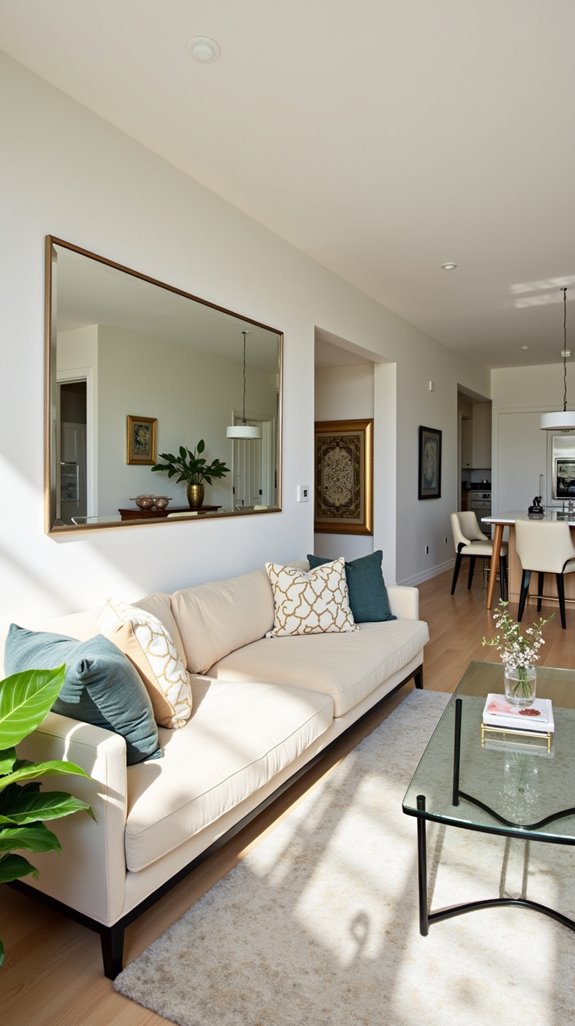
Mirrors can dramatically transform the ambiance of any room, creating an illusion of space and flow that makes interiors feel more open and inviting. By strategically placing mirrors to reflect light or views, you can draw the eye through your living room and kitchen, enhancing the overall aesthetic. Here’s how to utilize mirrors effectively:
| Location | Type of Mirror | Effect |
|---|---|---|
| Above a sofa | Large wall mirror | Expands visual space |
| In dining area | Decorative mirror | Reflects light, brightens |
| Kitchen backsplash | Mirrored tiles | Adds depth and chicness |
| Foyer | Statement mirror | Welcomes with elegance |
| Opposite window | Framed mirror | Amplifies natural light |
Incorporate Statement Pieces to Captivate
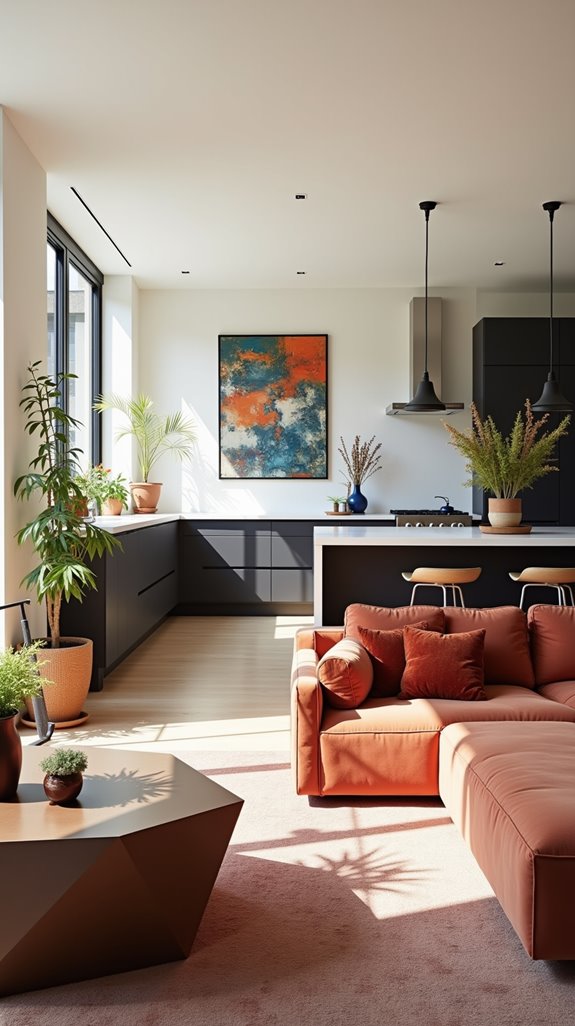
After creating a sense of openness with mirrors, it’s time to elevate your decor by incorporating statement pieces that truly captivate.
These unique elements not only draw attention but also express your personality. Consider selecting items that anchor your design, adding charisma and flair.
- Large Artwork: A bold painting or mural can serve as a stunning focal point.
- Unique Lighting Fixtures: Think oversized pendant lights or striking chandeliers to illuminate spaces.
- Designer Furniture: A vibrant sofa or a one-of-a-kind chair can spark conversation and interest.
Embrace these statement pieces to transform your living space.
Consider Semi-Open Floor Plans for Spacious Feel
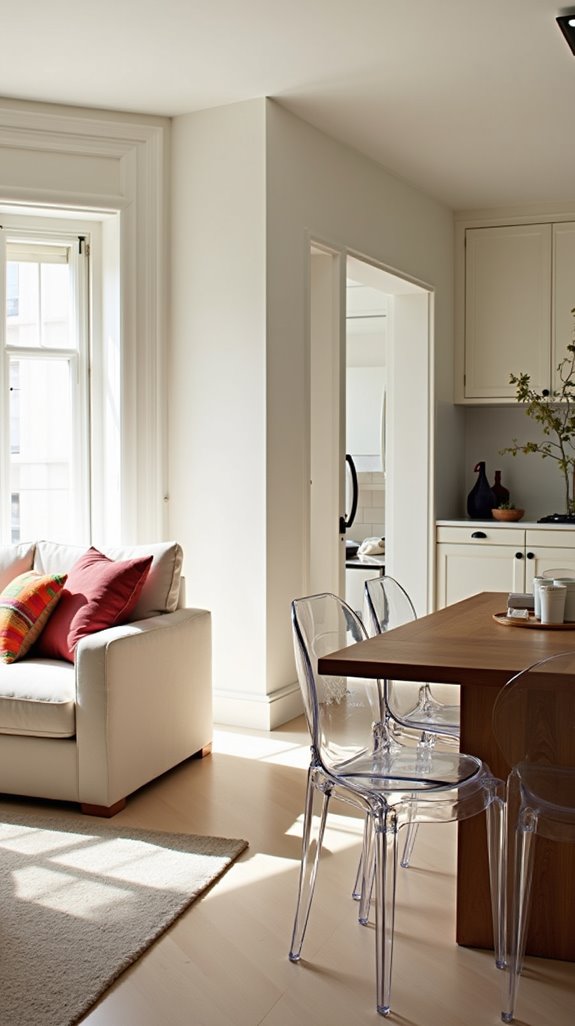
When considering ways to create an inviting and spacious atmosphere in your home, a semi-open floor plan can be a game changer. This design merges the coziness of a traditional layout with the airy feel of an open space.
Imagine your kitchen seamlessly flowing into the living room, allowing light and energy to move freely. You’ll enjoy easy interactions while hosting guests, without feeling cramped.
Plus, a semi-open layout enables you to define each area with decor, creating unique experiences that still connect. Embrace the freedom of movement and enjoy a harmonious space that feels both expansive and intimate.
Establish a Consistent Style Theme
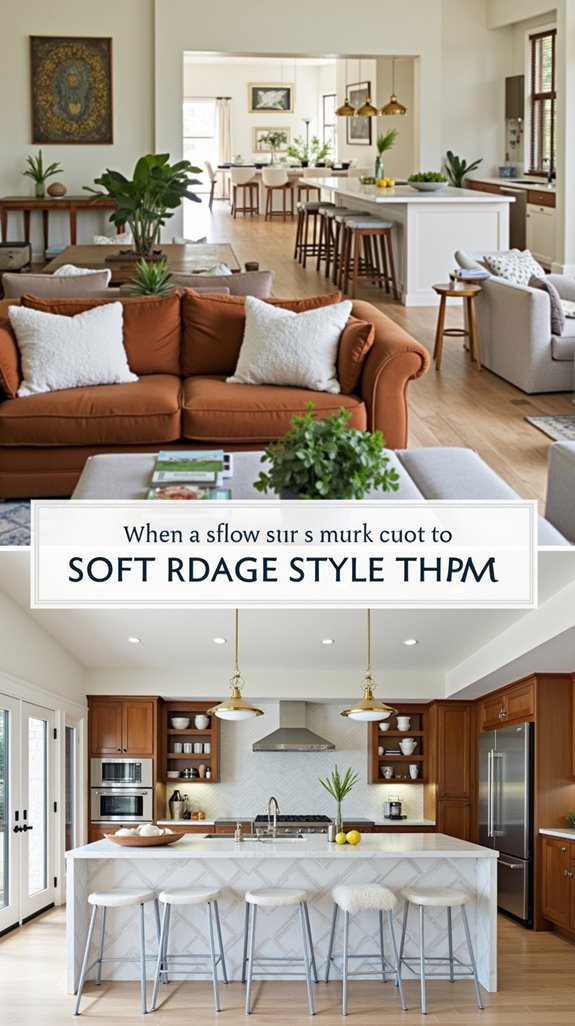
How can you transform your home into a cohesive sanctuary that reflects your personality?
Establishing a consistent style theme is essential. It unifies your living space, creating a harmonious vibe.
Here are three key components to reflect upon:
- Color Palette: Choose a color scheme that flows naturally throughout your living room and kitchen, ensuring cohesion with complementary shades.
- Materials and Textures: Use similar materials—like wood, stone, or fabric—to create a consistent feel.
- Decorative Motifs: Select a repeating motif, like geometric patterns or floral designs, to tie everything together beautifully.
With these elements, you’ll establish a stylish, inviting home.
Create Zones With Furniture Arrangement
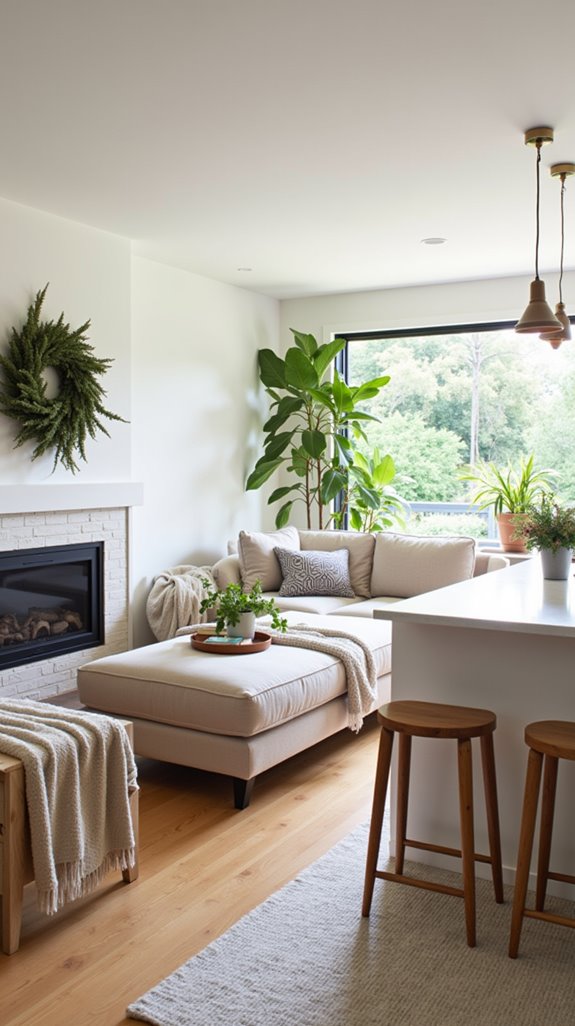
Creating designated zones with your furniture arrangement can completely transform your home into a functional and inviting space.
Start by defining areas for relaxation, dining, and social interaction. For instance, position your sofa to create a cozy living area, complemented by accent chairs for conversation.
Use rugs to visually separate your dining space, enhancing flow while providing a sense of intimacy.
Don’t hesitate to incorporate a console table or bookshelf to delineate boundaries.
By thoughtfully arranging your furnishings, you encourage fluid movement between these zones, allowing your home to feel organized, welcoming, and tailored to your lifestyle needs.
Discover the magic of zoning!
Display Personal Touches That Enhance Transitional Functionality
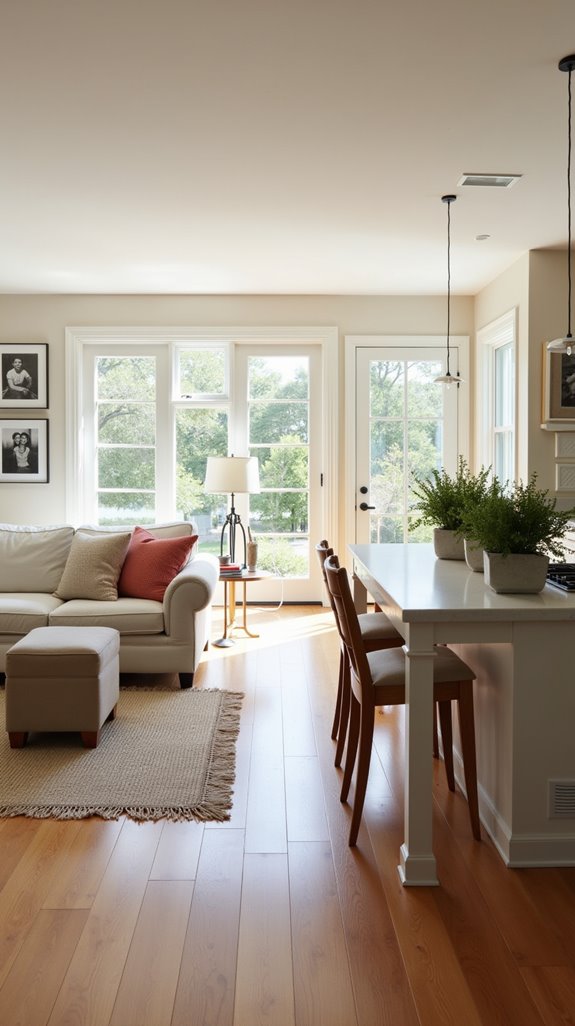
Incorporating personal touches into your decor not only reflects your unique personality but also enhances the functionality of your living space.
By thoughtfully displaying items that resonate with you, you create connections that feel both inviting and practical.
Here are three ways to add these touches:
- Gallery Wall: Showcase your favorite photos or artwork; it acts as a conversation starter while defining your space.
- Functional Decor: Use decorative baskets or stylish trays for easy organization, combining aesthetics with practicality.
- Customized Textiles: Incorporate cushions or throws in colors and patterns that speak to you, adding comfort and flair while enhancing functionality.
How Can Mirrors Help Your Space Flow?
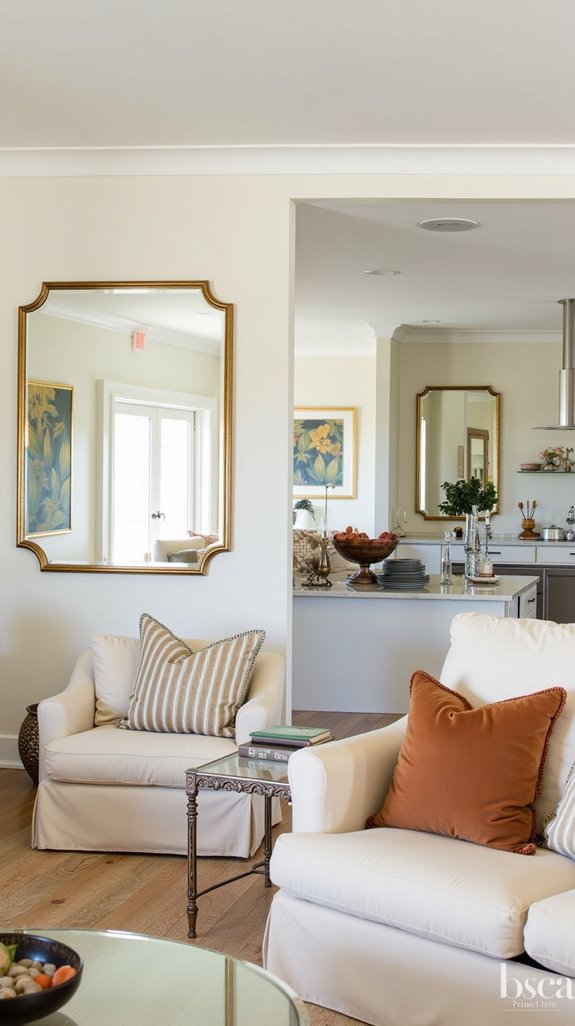
Mirrors have an incredible ability to transform the flow of your space, creating an illusion of depth and light that can make even the coziest rooms feel more expansive.
Placing mirrors strategically can reflect natural light, brightening dark corners and making your living area more welcoming. You might hang a large mirror opposite a window, maximizing sunlight and creating a vibrant atmosphere.
Additionally, mirrors can visually connect your living room and kitchen, enhancing the sense of continuity between the two spaces.